
PSC WB Clerkship Result 2025: Process, Meaning, Next Steps
Understanding the PSC WB Clerkship examination framework

The PSC WB Clerkship examination is one of the largest state-level recruitment processes in West Bengal. Conducted by the Public Service Commission, West Bengal, it targets clerical and lower-division assistant roles across multiple government departments. The exam structure is designed to filter a massive applicant pool through stages that test both aptitude and written competence.
At its core, the recruitment process is divided into two main stages. Part I functions as the screening layer, while Part II evaluates descriptive and language skills in depth. The result released through www.wbpsc.gov in relates to this crucial filtering stage. For candidates, clearing Part I means staying in the system; failing it means an immediate halt for the current cycle.
From an academic policy perspective, such a structure balances inclusivity with rigor. It allows a wide base to compete while ensuring only prepared candidates move forward.
Why Part I acts as a decisive gate
Part I is not about ranking candidates for final selection. Its role is elimination. This design explains why the PSC WB result list often contains tens of thousands of roll numbers.
The screening stage serves three purposes:
- Reducing the candidate pool to a manageable size
- Testing basic aptitude, language, and awareness
- Setting a minimum competence threshold
Key facts from the PSC WB Clerkship Result 2025

The Clerkship Result 2025 was declared in October and immediately drew attention due to its scale. According to official communication on www.wbpsc.gov in, a total of 89,821 candidates qualified for the next stage.
This figure alone reveals important insights. First, the participation rate remains extremely high. Second, the commission opted for a relatively inclusive cut-off, allowing a broad group to proceed. Third, logistical planning for Part II becomes a major administrative task.
For aspirants, the result is more than a list. It is a signal of competition density and the seriousness of the next phase.
What the numbers really indicate
A large qualifier count does not mean reduced competition. Instead, it shifts competition forward. Part II becomes the true differentiator, where writing clarity, structure, and state-specific knowledge matter.
From an evaluation standpoint, such results suggest:
- Moderate cut-off thresholds in Part I
- Higher emphasis on Part II performance
- Increased importance of preparation quality over quantity
How candidates interpret results published on www.wbpsc.gov in

When candidates access results on www.wbpsc.gov in, they often focus on a single binary outcome: qualified or not. Academically, however, the result carries layered meaning.
For those who qualify, it validates preparation strategy, time allocation, and exam temperament. For those who do not, it highlights gaps that may not be obvious without reflection. In both cases, the result functions as feedback.
Common interpretation patterns include:
- Qualified candidates shifting fully to descriptive practice
- Non-qualified candidates reassessing speed and accuracy
- Peer groups forming around Part II strategy
Emotional responses and academic reality
Public examinations create predictable emotional cycles. Relief, anxiety, disappointment, and renewed motivation appear simultaneously across the candidate base. These reactions are normal but must be converted into structured action.
An academic approach treats emotion as data, not distraction.
Step-by-step academic reading of the result process
Understanding how results are structured helps reduce confusion and misinformation. The PSC WB result document is typically a roll-number-based PDF rather than a scorecard.
Candidates reviewing the result should follow a clear sequence:
- Confirm roll number presence in the qualified list
- Note any remarks such as provisional qualification
- Preserve the document for future reference
- Track follow-up notifications on www.wbpsc.gov in
This method prevents overreliance on rumors or unofficial interpretations.
What qualifying for Part II actually means

Qualification does not guarantee final selection. It grants eligibility to compete in a more demanding assessment. Part II tests writing ability, coherence, grammar, comprehension, and applied knowledge.
Academically, this shift requires a change in preparation style:
- From objective accuracy to expressive clarity
- From speed-based practice to depth-based writing
- From memorization to structured argumentation
Candidates who fail to adapt often struggle despite clearing Part I.
Skills that gain importance after qualification
At this stage, success depends less on raw knowledge and more on presentation. Key skill areas include:
- Essay structuring
- Report and letter drafting
- Time-managed descriptive answers
Comparative overview of stages in PSC WB Clerkship
| Stage | Nature of Test | Primary Purpose | Competitive Focus |
| Part I | Objective screening | Elimination | Speed and accuracy |
| Part II | Descriptive exam | Differentiation | Writing quality |
| Final phase | Verification | Compliance | Documentation |
This table clarifies why the Clerkship Result 2025 should be seen as a transition point rather than an endpoint.
Preparing the academic mindset for the next phase
Once results are declared, time becomes the scarcest resource. Candidates who qualify must immediately realign their study plan. Those who do not must decide whether to repeat the attempt or redirect effort.
The most effective response includes:
- Honest self-assessment
- Clear short-term planning
- Controlled information intake
Is your preparation now aligned with what the exam actually demands, not what it used to demand?
Strategic preparation for Part II after the PSC WB result
Once the PSC WB Clerkship Result 2025 is declared, preparation must shift fast. Part II is not an extension of Part I; it is a different academic task. Candidates who continue with objective-style habits often underperform, even with strong knowledge.
The descriptive stage evaluates clarity, structure, and relevance. Answers are judged on how well ideas are organized and expressed, not just on what is written. This is where many aspirants lose ground.
A productive transition plan usually includes:
- Redesigning the daily timetable around writing practice
- Reducing MCQ-heavy preparation
- Introducing feedback-driven revision
What to practice daily for Part II
Focus on building muscle memory for writing. This includes:
- Short essays on social and administrative themes
- Letter and report formats with time limits
- Grammar correction through rewriting, not rules
Academic mistakes candidates repeat after qualifying
Clearing Part I often creates a false sense of safety. This leads to common strategic errors that weaken Part II performance.
The most frequent mistakes are:
- Delaying descriptive practice due to overconfidence
- Reading excessively without writing enough
- Ignoring state-specific context in answers
From an academic review standpoint, these errors reflect misreading the assessment objective. Part II rewards application, not accumulation.
How to avoid these traps
Adopt a checklist approach:
- Write something every day, even if short
- Review answers critically after 24 hours
- Compare structure, not content, with model responses
For candidates who did not qualify Part I

Not qualifying does not imply inability. It indicates mismatch between preparation and test demand. Many successful candidates clear the PSC WB Clerkship in later attempts after structured correction.
The result should be treated as diagnostic data. Instead of restarting blindly, focus on identifying precise failure points.
Useful reflection areas include:
- Time spent per question
- Accuracy versus speed balance
- Sections with repeated errors
Productive reset strategy
A reset works best when it is specific:
- Rebuild fundamentals in weak sections
- Simulate full-length tests regularly
- Track improvement metrics weekly
Failure only becomes final when feedback is ignored.
Interpreting competition after the 2025 result
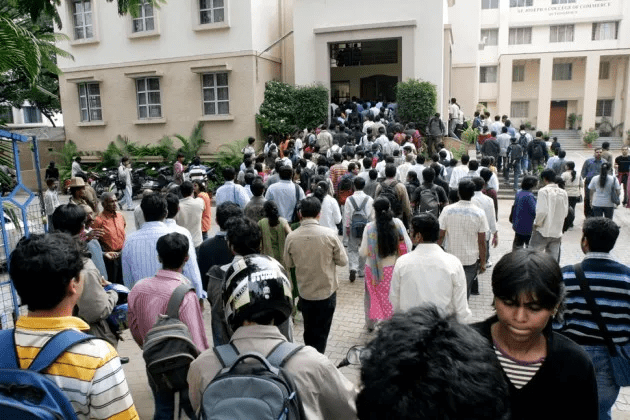
With nearly 90,000 qualifiers, competition intensity increases sharply at Part II. However, the nature of competition changes. It becomes qualitative rather than quantitative.
Candidates are no longer competing on how many questions they attempt, but on how well they communicate. This favors disciplined learners over aggressive guessers.
From a policy lens, this stage restores merit differentiation that mass screening cannot achieve.
What separates top performers
Top candidates typically show:
- Consistent writing tone
- Clear paragraph logic
- Relevant examples without excess detail
Administrative expectations from the commission
After publishing results on www.wbpsc.gov in, the commission’s responsibility shifts to coordination. Managing venues, invigilation, and timelines for such a large group is complex.
Transparent communication reduces anxiety and rumor cycles. Clear notices about schedules, formats, and documentation help candidates focus on preparation instead of speculation.
Academically, predictable administration improves outcome validity.
Long-term value of the PSC WB Clerkship process
Beyond immediate employment, the Clerkship examination builds transferable skills. Candidates develop discipline, comprehension, writing ability, and administrative awareness. These skills remain valuable even if selection is not achieved in the first attempt.
From an educational standpoint, the exam functions as a training ground for structured thinking under pressure.
Isn’t that a core objective of public recruitment systems?
Final academic perspective on the 2025 result

The PSC WB Clerkship Result 2025 is not merely an announcement. It is a sorting mechanism that reshapes candidate behavior, preparation strategies, and institutional workload. For some, it opens the door to the final stage. For others, it provides critical feedback.
What matters next is response quality. Those who adapt thoughtfully gain an advantage. Those who react emotionally lose time.
In competitive examinations, progress belongs to candidates who treat results as information, not judgment.